
HOA snow removal works best when the board, property manager, residents and contractor understand the same plan. Shared roads, parking courts, sidewalks and building entrances all need attention, but they may have different priorities and access restrictions. A plowing price alone does not explain how the community will operate during a storm.
For managed communities in Westchester County and the Tri-State Area of New York, Connecticut and New Jersey, preseason planning is a chance to settle those details before snow arrives. Use these five steps to prepare a practical scope for your HOA or condominium community, then confirm the arrangements in your property-specific proposal.
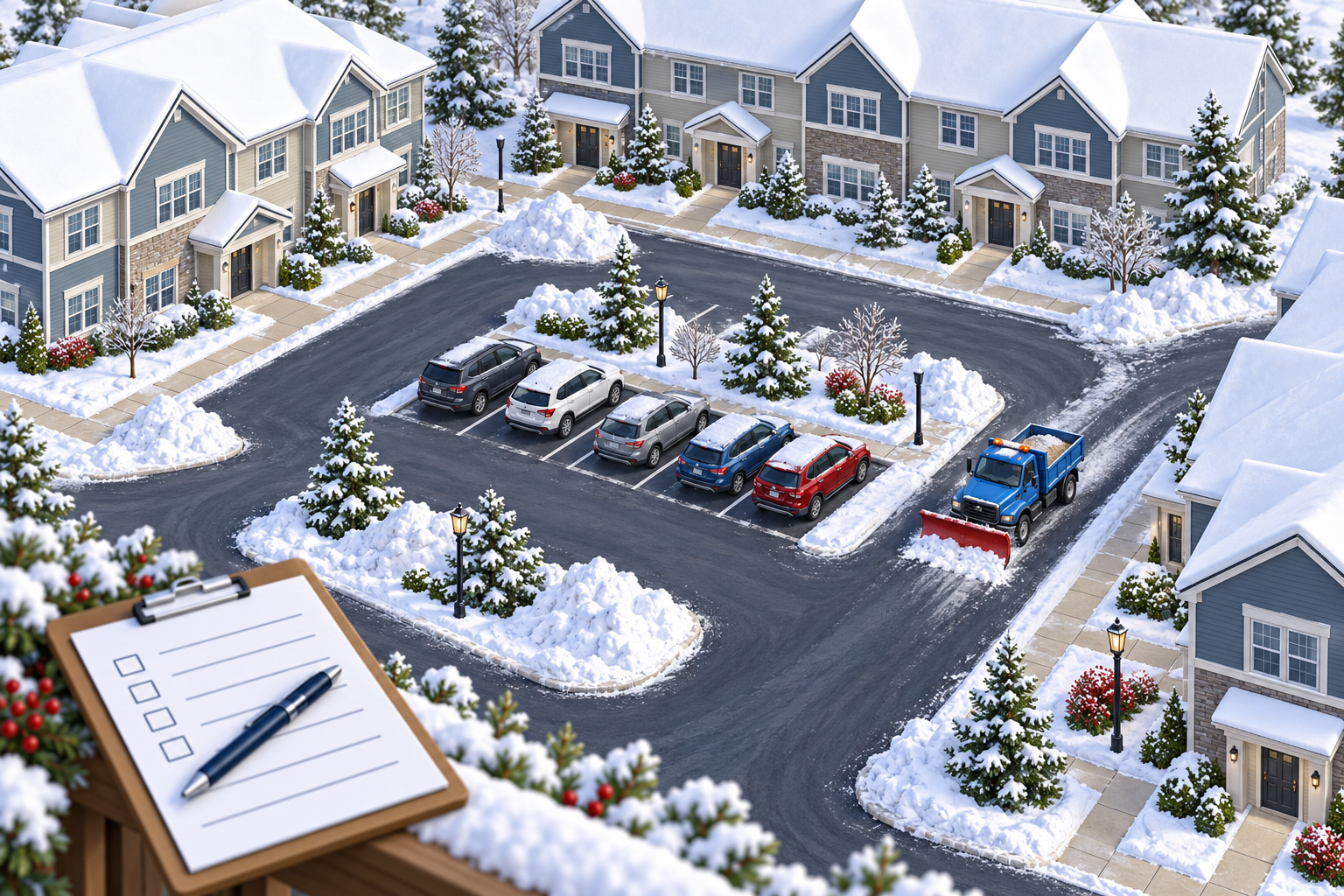
1. Map the HOA snow removal boundaries
Mark every area the association wants included: internal roads, visitor parking, resident parking courts, sidewalks, stairs, mailbox approaches and common-building entrances. Separately identify areas maintained by individual owners, another contractor or the municipality. Confirm responsibilities with management rather than assuming the snow contractor covers everything within the development.
For example, a townhouse community might request service for shared lanes and a clubhouse walk while individual driveways remain outside the agreement. Label those boundaries on one site plan and use it for every quote. Our snow-removal site-walk guide explains what to bring to the visit.
2. Set priorities and a parked-car plan
Discuss the order of work with the contractor. Identify community access routes, pedestrian connections, accessible parking spaces and common entrances that need particular attention. Explain delivery schedules, refuse collection and other activity that could affect equipment access. Agree on realistic service expectations for the actual property.
Parked cars are a separate planning issue. Decide who will notify residents, whether vehicles can be relocated under community rules, and how cleared spaces will be communicated. Ask what happens when cars move after the first pass: is a return visit included, separately charged or subject to scheduling? Do not promise residents a return time that the contractor has not confirmed.
3. Define ice treatment and snow storage
A plowing scope does not automatically include every ice-control task. List the surfaces to be treated, how treatment is authorized, how it is priced, and how concerns between visits should be reported. Discuss any surface or landscaping considerations during the walkthrough. Review our de-icing and salting services when preparing those questions.
Mark proposed snow-storage locations and review their effect on parking, pedestrian access, drainage and visibility. Ask how the plan changes when those areas fill. Moving a pile elsewhere on the property and hauling snow off site are different services; identify the approval process and charges for each.
4. Give residents one communication plan
Name a primary management contact and a backup. Decide who can request additional work and approve charges. Give residents one clear way to report an obstructed walk, parked vehicle or other concern, so the contractor does not receive conflicting instructions from multiple households.
A short preseason notice can explain the service areas, parking arrangements, reporting channel and how updates will be shared. During a storm, distinguish a weather forecast from a confirmed service update. Use the National Weather Service winter resources for weather-awareness information, and obtain property-specific service timing from your contractor.
5. Compare the full scope before approving a quote
Ask each bidder to price the same marked areas and explain service triggers, covered dates, ice treatment, return visits and snow hauling. Clarify what records are provided after service and how management can raise a concern. A lower total may reflect a smaller scope rather than a better fit for the community.
Whether the proposal is seasonal or per event, review its inclusions and exclusions before comparing totals. Keep the approved map, scope and contact plan together so a new board member or manager can understand the arrangement. See our guide to comparing commercial snow-removal quotes for more questions to ask.
Plan winter service for your community
JC Snow Removal serves managed HOAs and condominium communities, along with other commercial properties, across the Tri-State Area and Westchester County. Our HOA and condominium snow-removal service is for managed shared spaces, not individual residential driveways. Send your community address, property map if available, and the areas needing service. We will review route availability and discuss a site walk and property-specific scope.
Request an HOA snow-removal quote or call 203-539-9752. A quote request does not book service; availability and the final scope are confirmed separately.